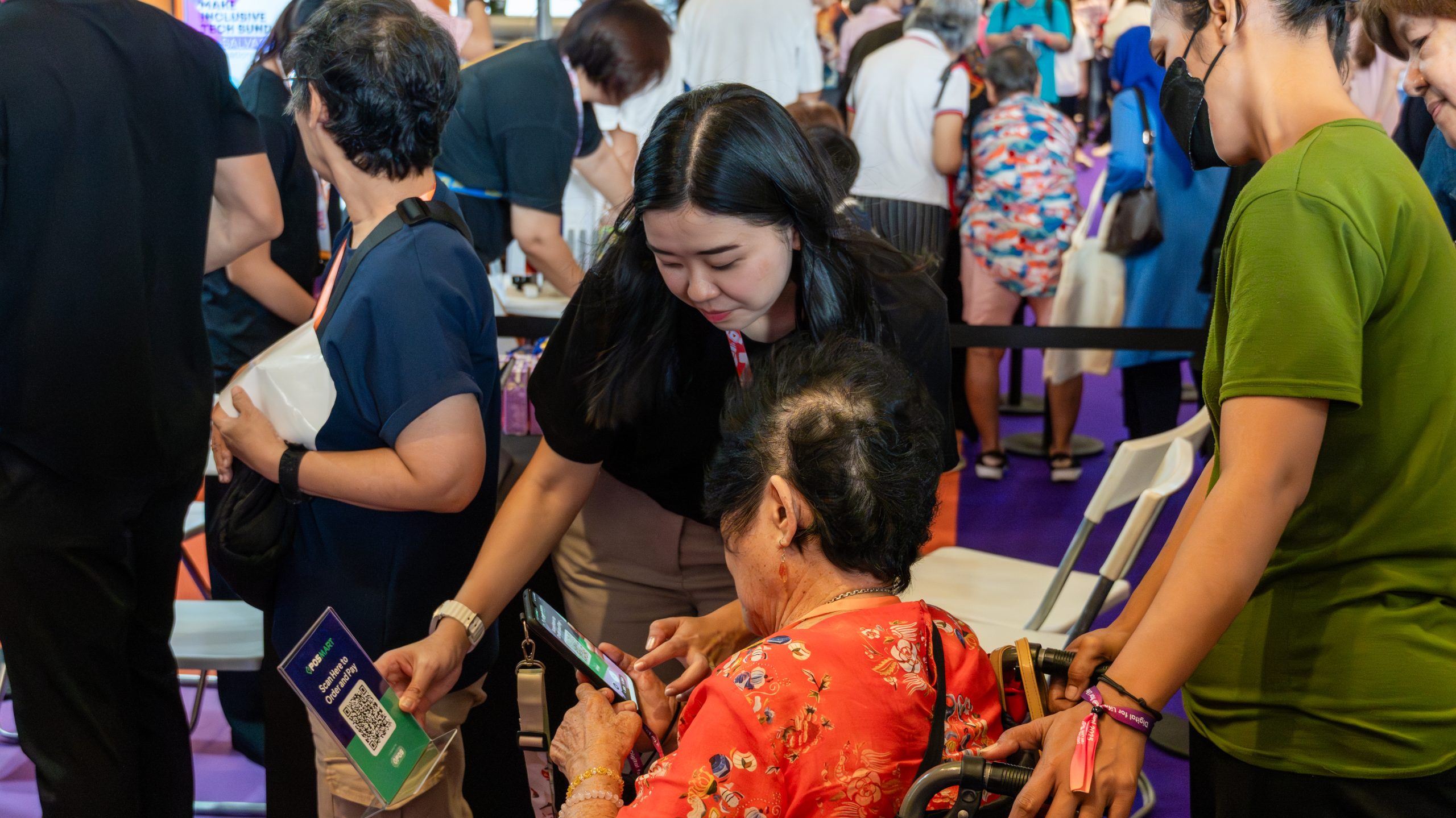
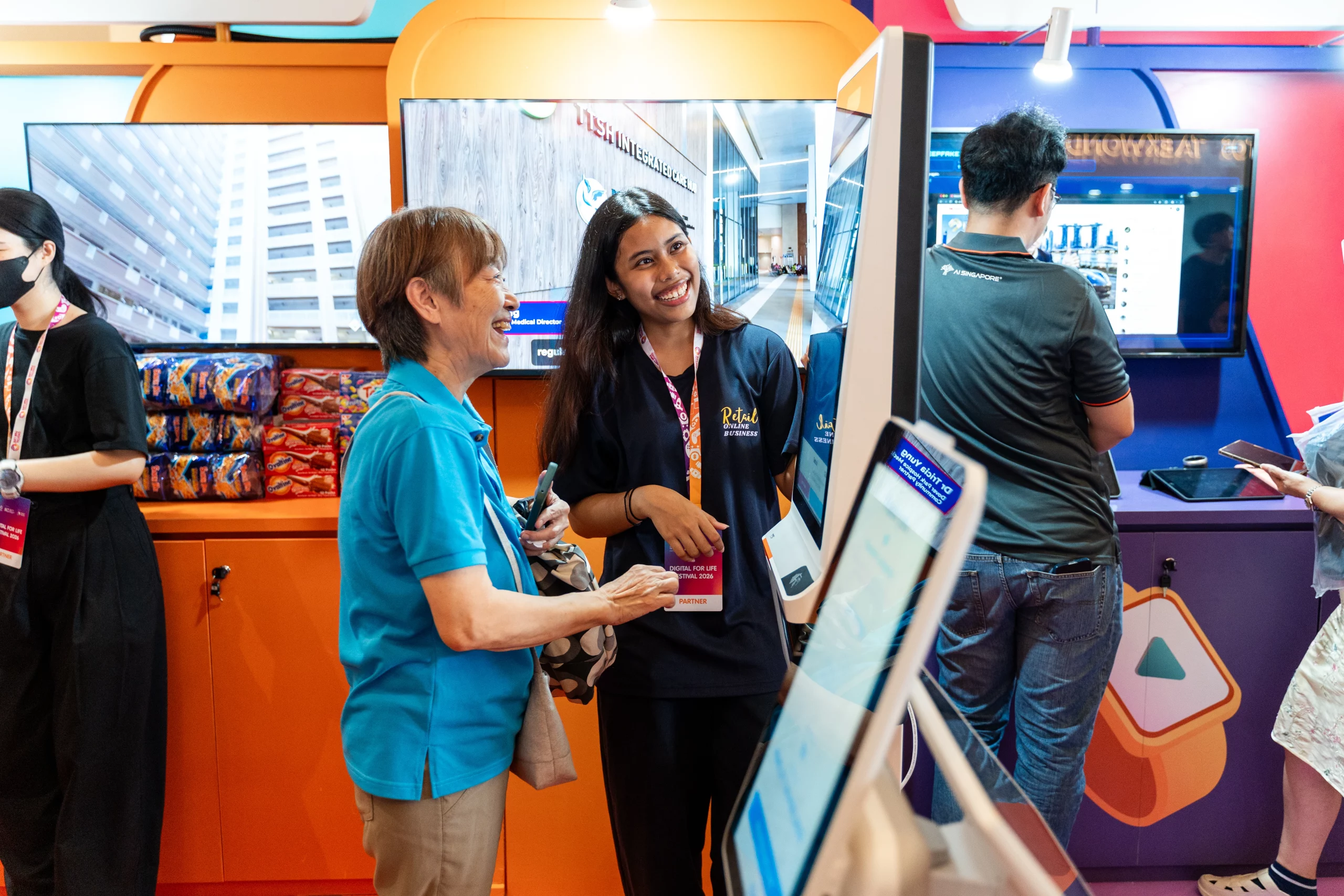
Trainers stayed beside each machine to guide visitors through every step, creating a welcoming environment where participants could learn at their own pace, ask questions and practise without the pressure of holding up a queue.
The experience demonstrated how hands-on learning can help bridge the digital confidence gap, particularly for seniors who may be hesitant about using unfamiliar technology.
A Festival for Every Generation
The Digital for Life Festival is the flagship community event of Singapore’s Digital for Life movement, which helps people of all ages build the confidence and skills to live well in a digital world.
The 2026 Festival, themed Play It Forward, took place across two weekends at VivoCity and Heartbeat@Bedok, featuring interactive activities covering digital skills, online safety and emerging technologies.
One Tap at a Time: Making Digital Learning Accessible
Self-service kiosks have become part of everyday life in Singapore, from ordering lunch to paying for groceries. They can shorten queues and help businesses serve customers more efficiently, but for some older users, unfamiliar screens can feel daunting.
Common worries include pressing the wrong button, getting stuck halfway or holding up other customers.
To address these concerns, EPOS designed a short, hands-on experience lasting approximately three to five minutes per participant.
-
A warm welcome: Trainers introduced participants to either the F&B self-order kiosk or the hybrid retail kiosk.
-
Guided digital shopping: Participants practised browsing menus, selecting items, scanning products and navigating the payment process.
-
A tangible reward: Participants received a snack or drink after completing the simulated shopping experience, reinforcing the connection between digital actions and everyday purchases.
-
Participant feedback: A short survey captured participants’ confidence before the experience and their willingness to use digital transactions afterwards.
Rather than simply watching a demonstration, participants were encouraged to interact with the kiosks themselves. Trainers provided guidance in conversational language, repeated instructions where necessary and allowed participants to learn without feeling rushed.
The survey responses will also help EPOS understand where first-time users need the most support.
Measuring Impact: Building Confidence Through Experience
The 2026 activation collected 202 survey responses, providing insights into how practical digital learning can encourage greater confidence and willingness to use digital transactions.
93.6%
Positive digital readiness after the experience
81.1%
Initially hesitant participants expressing positive readiness afterwards
50.0%
Respondents aged 65 and above
Following the hands-on experience, 93.6% of respondents expressed confidence or willingness to use digital transactions, either independently or with assistance. Among participants who initially lacked confidence, 81.1% subsequently expressed positive digital readiness.
Half of all respondents were aged 65 and above, highlighting the importance of making digital learning accessible to older members of the community.
These findings reflect participants’ immediate, self-reported confidence and willingness after the experience, rather than verified long-term adoption.
Among participants who initially lacked confidence, 81.1% subsequently expressed willingness to use digital transactions, compared with approximately 65% in 2025.
For EPOS, the feedback reinforces an important lesson: digital inclusion is not simply about making technology available, but about helping people develop the confidence to use it.
Why Digital Inclusion Matters
As more everyday activities move onto screens, being comfortable with digital transactions is becoming an increasingly important life skill.
For seniors, confidence in using self-service kiosks can support greater independence when ordering food, shopping or accessing everyday services.
For businesses, accessible technology can help improve the customer experience and enable more people to participate in digital commerce.
Digital inclusion also benefits communities beyond the retail environment. Students preparing for employment, persons with disabilities and individuals with limited exposure to technology can benefit from practical learning opportunities in safe, supportive settings.
These experiences demonstrate how technology can become a tool for participation, independence and opportunity when it is designed around people’s needs.
Beyond the Festival: Supporting Nonprofits Through Digital Transformation
The need for digital inclusion extends beyond festivals and community events. Schools, charities and social service organisations also play an important role in helping underserved groups build practical digital skills.
For nonprofit organisations operating thrift shops, community retail spaces or social enterprises, digital retail technology can serve two purposes: improving daily operations and creating hands-on learning opportunities for beneficiaries.
For example:
-
Schools and vocational programmes can use digital retail systems to help students develop workplace-relevant skills, including managing transactions, handling orders and understanding retail operations.
-
Charities and social enterprises operating thrift shops can explore digital solutions to streamline sales, inventory management and reporting, while providing opportunities for volunteers and beneficiaries to learn practical digital skills.
-
Community organisations and farmers’ markets can use familiar shopping environments to introduce seniors and digitally hesitant residents to cashless payments and self-service technology.
By integrating technology into existing community programmes, nonprofit organisations can create opportunities for digital learning that are practical, relevant and accessible.
EPOS hopes to collaborate with more nonprofit and community organisations to explore how digital retail solutions can support their operations while contributing to meaningful community outcomes.
Exploring NCSS Funding for Nonprofit Digital Transformation
For social service agencies considering digital transformation, financial support may be available through the National Council of Social Service (NCSS).
The NCSS Transformation Sustainability Scheme (TSS) supports eligible social service agencies in strengthening organisational capabilities, including digitalisation and service transformation.
Depending on the applicable funding pathway and eligibility requirements, organisations may receive up to 80% co-funding for eligible initiatives.
This creates an opportunity for social service agencies to explore how digital solutions could help them:
-
Improve the efficiency of retail and social-enterprise operations.
-
Simplify inventory management, transactions and reporting.
-
Reduce manual administrative work.
-
Strengthen service delivery and operational capabilities.
-
Create practical digital learning opportunities for staff, volunteers and beneficiaries.
Organisations should confirm their eligibility, the applicable funding conditions and whether their proposed solutions qualify directly with NCSS before making procurement commitments.
For more information, visit the NCSS Transformation Sustainability Scheme.
Looking Ahead: Making Digital Inclusion Part of Everyday Life
The Digital for Life Festival demonstrated that even a few minutes of patient, hands-on guidance can encourage people to approach unfamiliar technology with greater confidence.
EPOS remains committed to supporting digital adoption among both businesses and the communities they serve.
Beyond community events, EPOS welcomes opportunities to work with nonprofit organisations, schools and social enterprises to explore how digital retail technology can improve operations, strengthen digital skills and create more inclusive experiences.
Is Your Nonprofit Organisation Exploring Digital Transformation?
If your organisation operates a thrift shop, community retail space, social enterprise or vocational learning programme, EPOS would welcome a conversation about your digitalisation needs.
Contact EPOS to explore suitable digital retail solutions and learn how technology can support your organisation’s operations and community objectives.
Eligible social service agencies can also explore funding opportunities through the NCSS Transformation Sustainability Scheme.
Funding eligibility and approval are determined by NCSS. EPOS does not guarantee grant eligibility or approval.
EPOS thanks the Digital for Life Festival organisers, community partners and all participants who joined the hands-on learning activities at Heartbeat@Bedok.