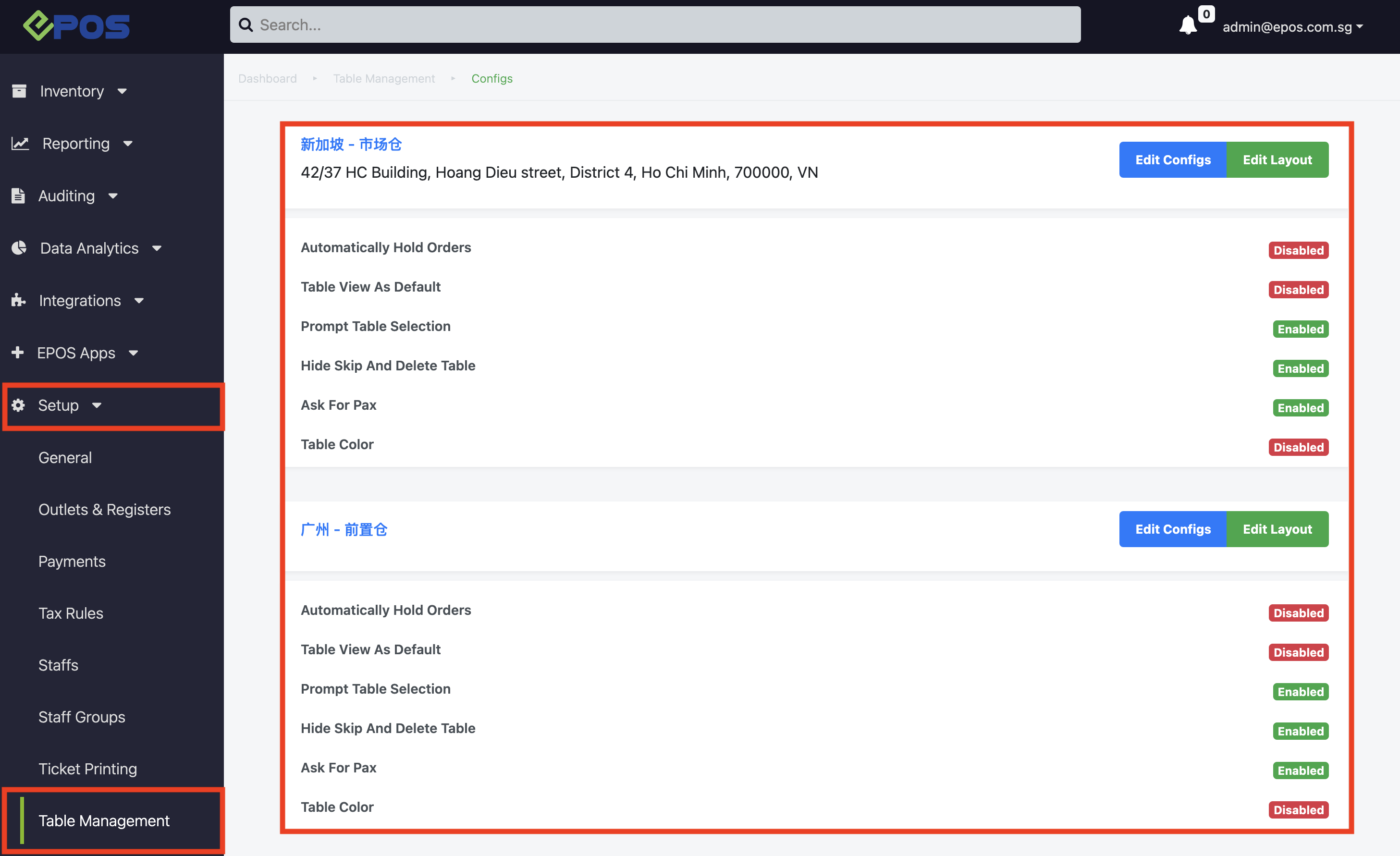
First, please go to the backend, then navigate to the Setup section and select the Table Management tab.
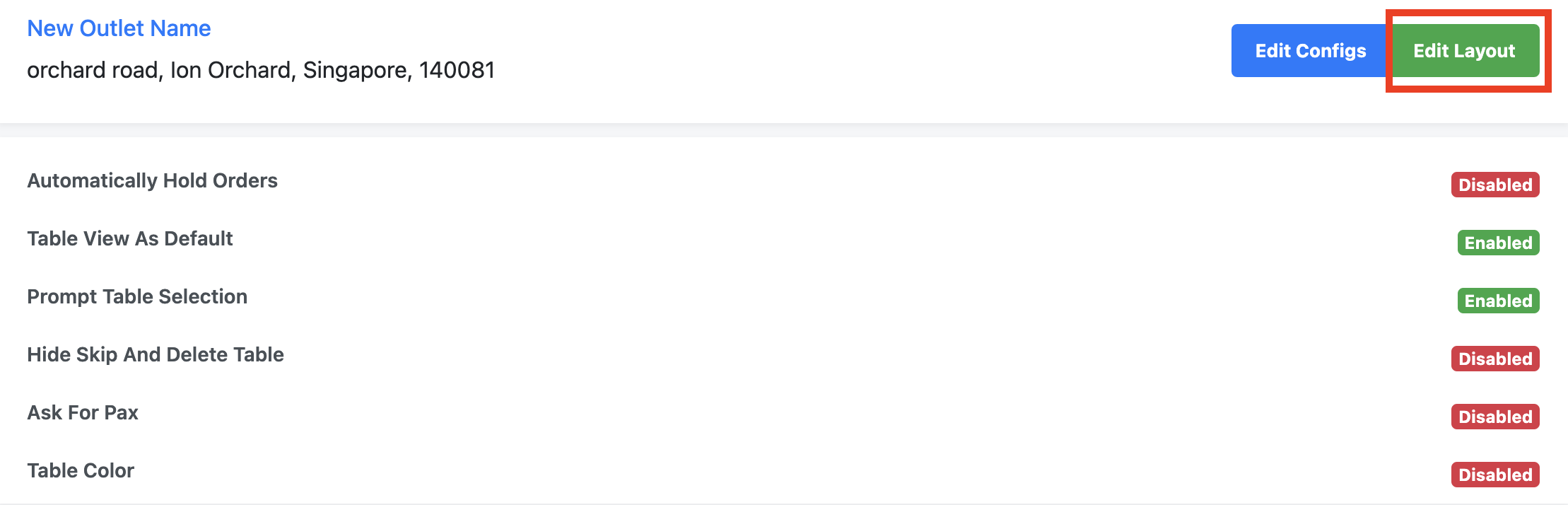
Users will then see the available outlets. To edit your preferred outlet, choose the outlet and click “Edit Layout.”
Note: This section covers how to set up QR ordering and in-store ordering. To learn more about the features of table management, please click the link here.
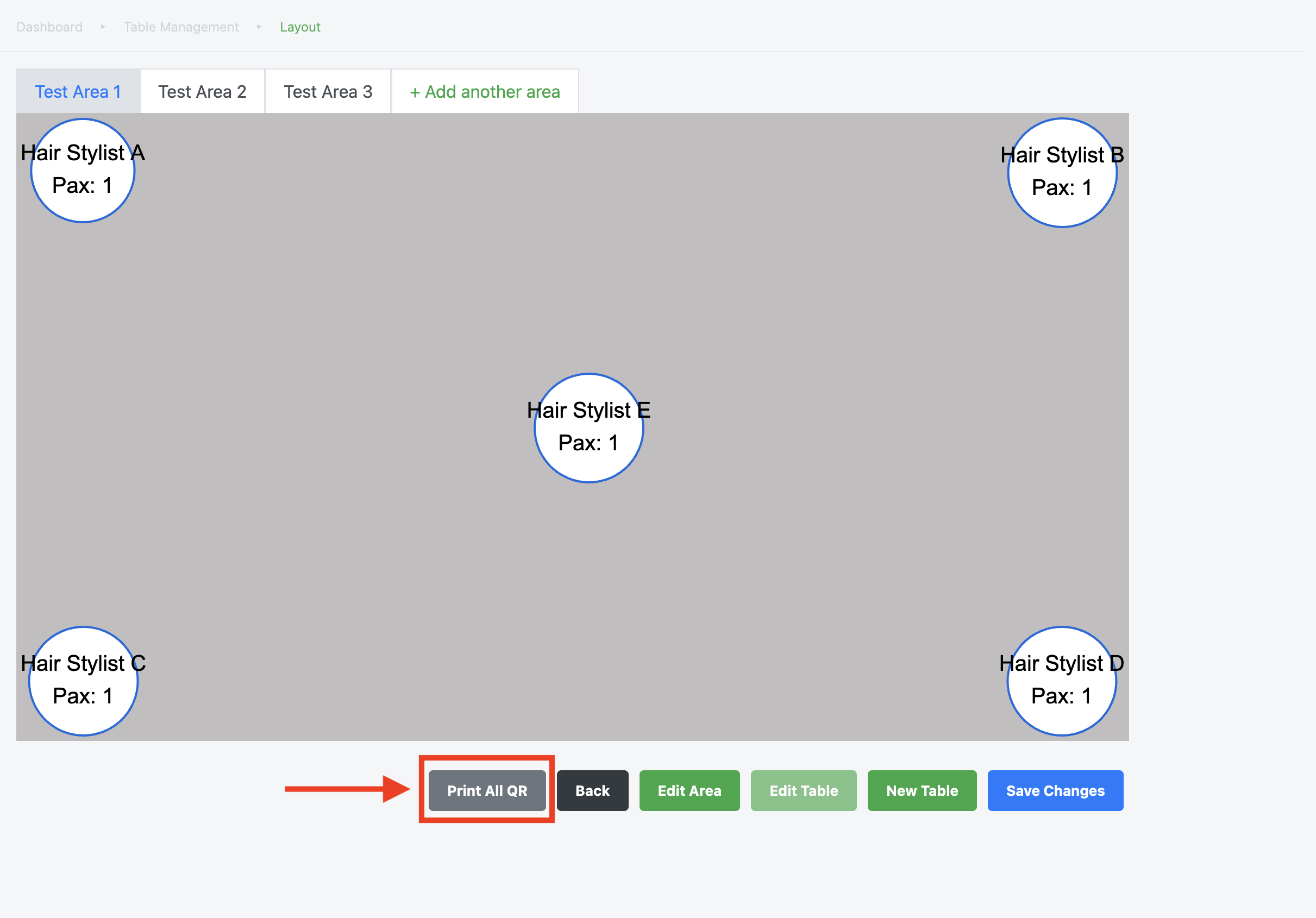
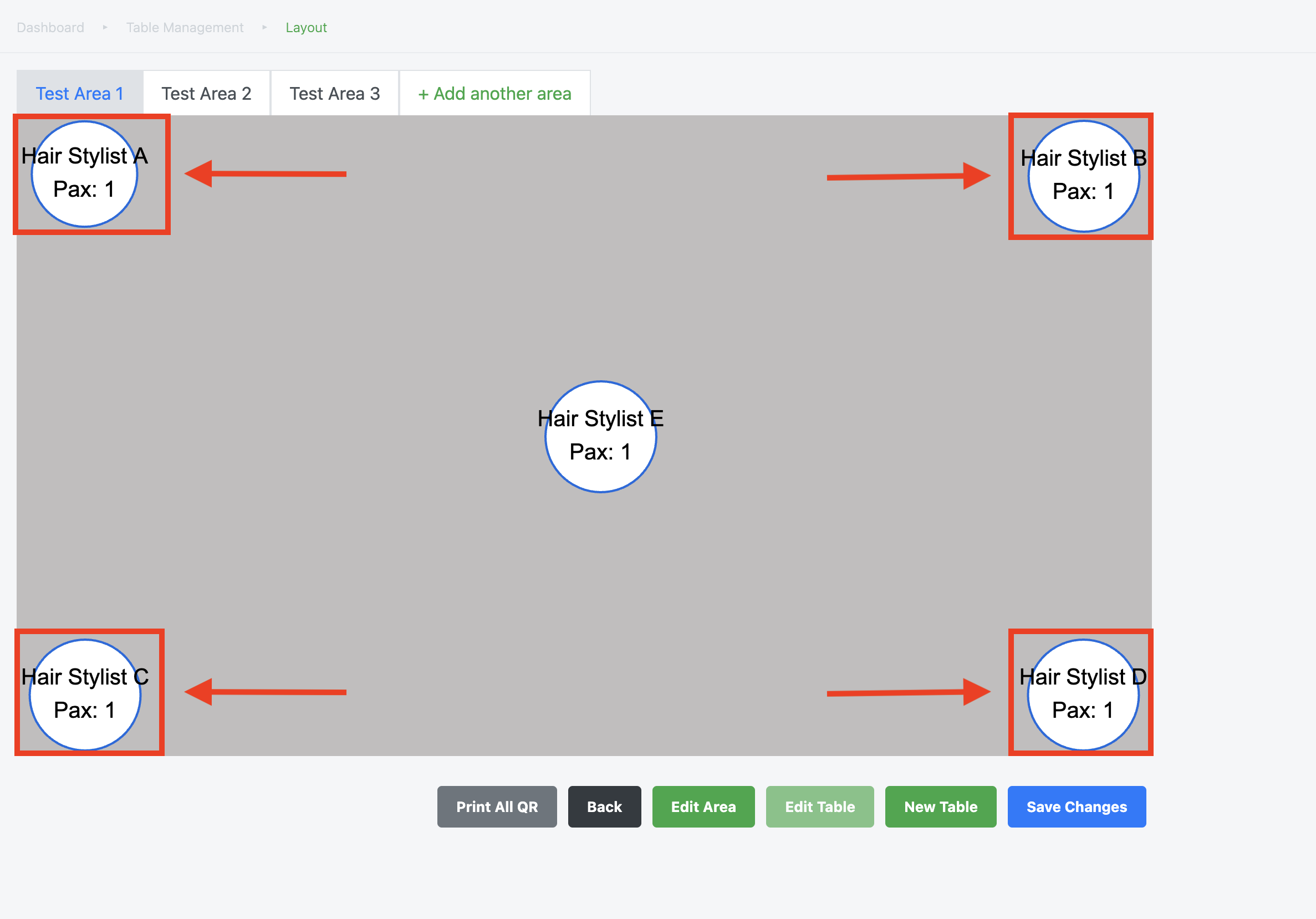
Afterward, users will be taken to a new display showing the layout of the selected outlet area.
Users can then choose to print QR codes for all the tables by clicking “Print All QR Codes,” as highlighted below.
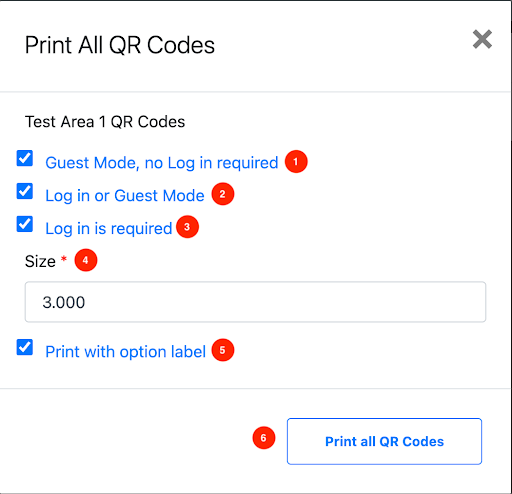
A new display will show the available options for QR codes:
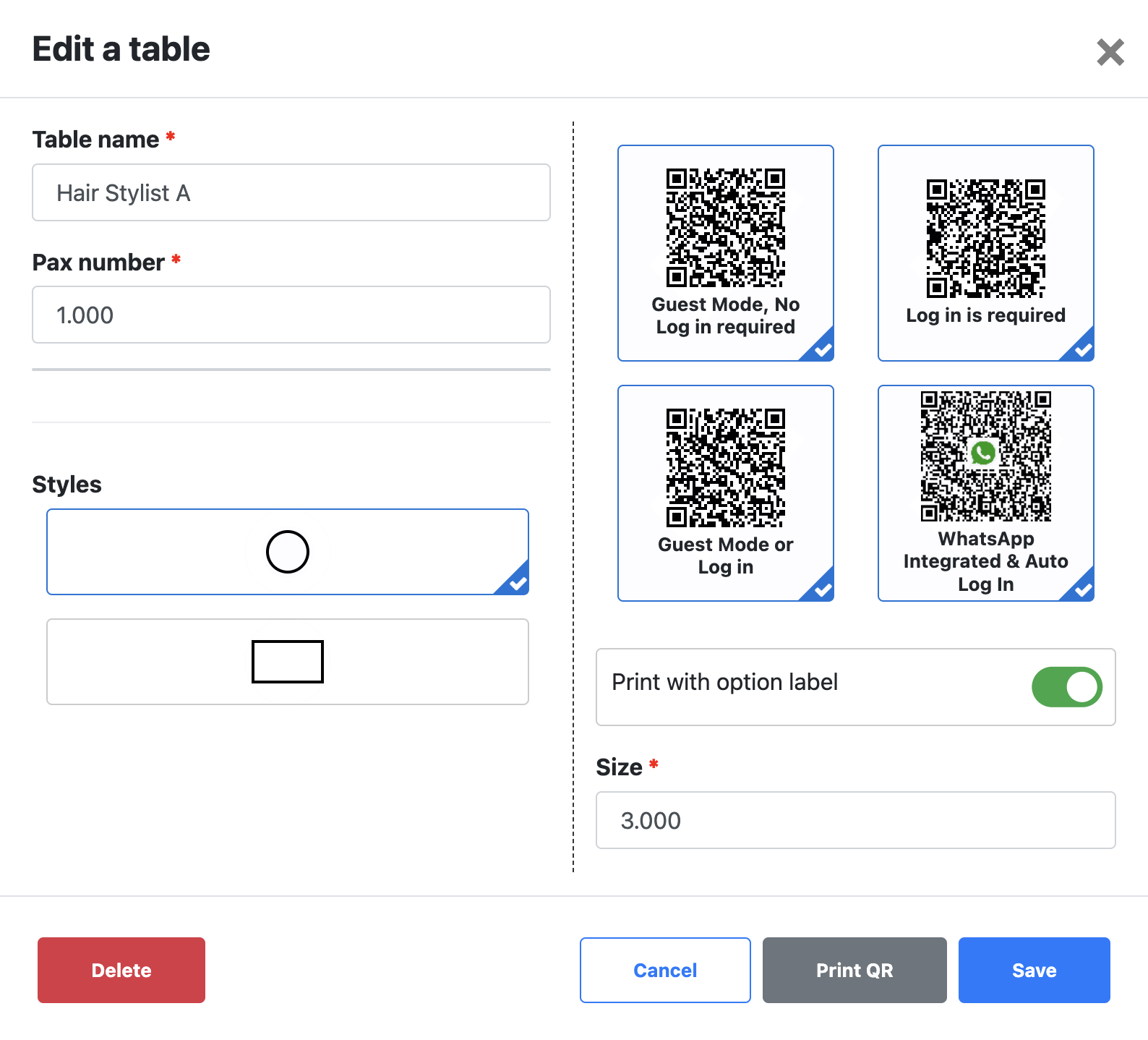
This window allows you to select the type of QR codes you want to print for your customers.
Customers can order through the QR code and access the web app without needing to log in first.
Allows customers to decide whether to log in to their account to place an order or use guest mode to order without logging in.
Customers must log in to place orders through the web app.
Decide the size of the QR code for printing
Determines whether the QR code will include a label indicating if login is required, not required, or optional for placing orders.
Note: Guest Mode means Login is not required for customers to place orders
Note: Each table is tagged to 4 QR codes: Guest Mode (No Login Required), Login Required, Guest Mode / Login, and WATI. The WATI QR code is only available if the WATI module is set up.
However, users also have the option to print QR codes for specific tables instead of printing for all tables.
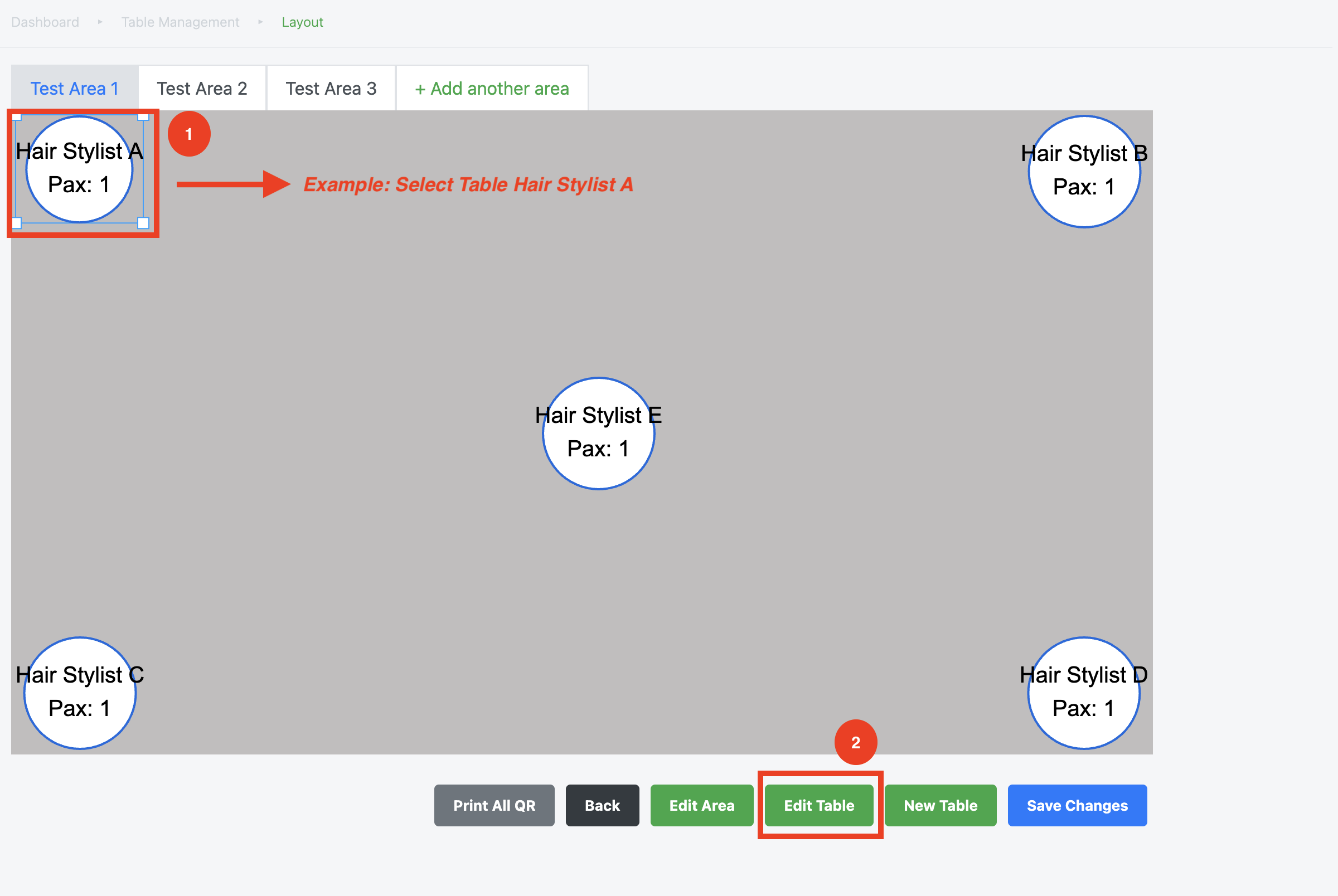
To do this, simply select your preferred table.
Then please proceed to click on the edit table button as shown below:
Users will then be taken to the display. Please select your desired options as explained previously and proceed to print the QR code.
Note: Users can choose to have customer orders from the Web App sent to the POS for cashier confirmation first, or directly to the kitchen printer, using the “Send to Kitchen” configuration. Refer to Web Ordering Configuration for setup.
Menu Page
Customers must scan the table QR code to access the EPOS V5 QR Ordering App.
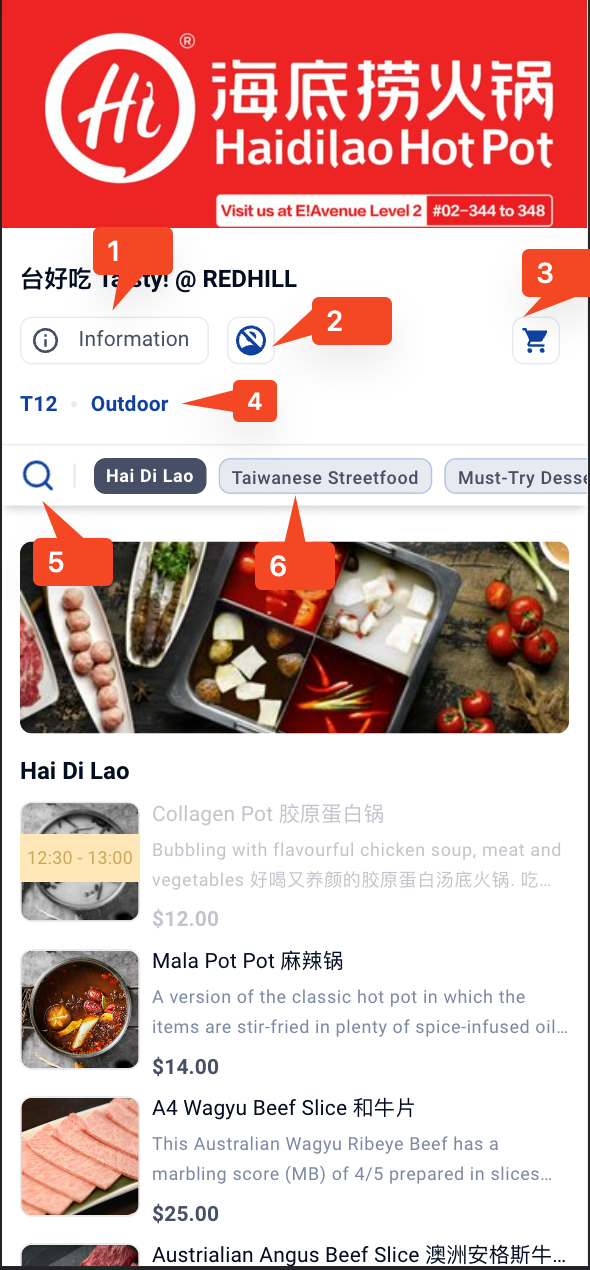
Information: Store info, operating hours and services.
Customer Login: Indicates whether the customer has logged in, and allows customers to log in using their number.
Cart: Allows customers to view their existing cart items.
Table & Area: Informs customers of their table and area. Customers can click into it to change their table or area.
Search: Allows customers to search for specific products.
Category scroll: Allows customers to scroll and jump to categories.
Making an Order
The ordering flow for “Dine-in” and “Takeaway” in QR Ordering is similar. Customers first select the items they want to order:
Select the food of choice.
Select applicable modifiers (if any).
Add item notes (if any).
Add the selected item to the cart.
Selecting an item, choosing modifiers and adding to cart:
Cart Page
Customers click on the cart icon to access the cart / checkout page. Both Dine-in and Takeaway share the same steps to make an order; the dining mode is only an indication to the kitchen staff.
Pay at Cashier:
At the cart page, customers can pick out recommendations and add order notes.
Once done, customers select their dining mode.
Customers are redirected to the payment page, where they select Pay at Cashier.
Once successful, customers are presented with a receipt for tracking of their order.
Pay in App:
At the cart page, customers can pick out recommendations and add order notes.
Once done, customers select their dining mode.
Customers are redirected to the payment page, where they select a payment method and complete payment.
Once successful, customers are presented with a receipt for tracking of their order.
Depending on the payment mode and backend configurations, QR orders in store are handled differently.
Pay at Cashier
Orders flow into the “Pending Confirmation” column.
Orders are also automatically fired to the kitchen if the “Send to Kitchen” configuration is turned on.
The cashier clicks into the order.
The cashier clicks on the “Confirm” button in the order.
The cashier then completes payment for the order.
If the “Send to Kitchen” configuration is not turned on, the cashier has to send the order to the kitchen manually after payment.
“Send to Kitchen” turned off:
“Send to Kitchen” turned on:
Paid in App
Orders flow directly into the “Confirmed” column.
Orders are also automatically fired to the kitchen if the “Send to Kitchen” configuration is turned on.
If the “Send to Kitchen” configuration is not turned on, staff have to retrieve the order from the “QR Order” column, select the order marked as “Paid” and fire it to the kitchen manually.
“Send to Kitchen” turned off:
“Send to Kitchen” turned on:
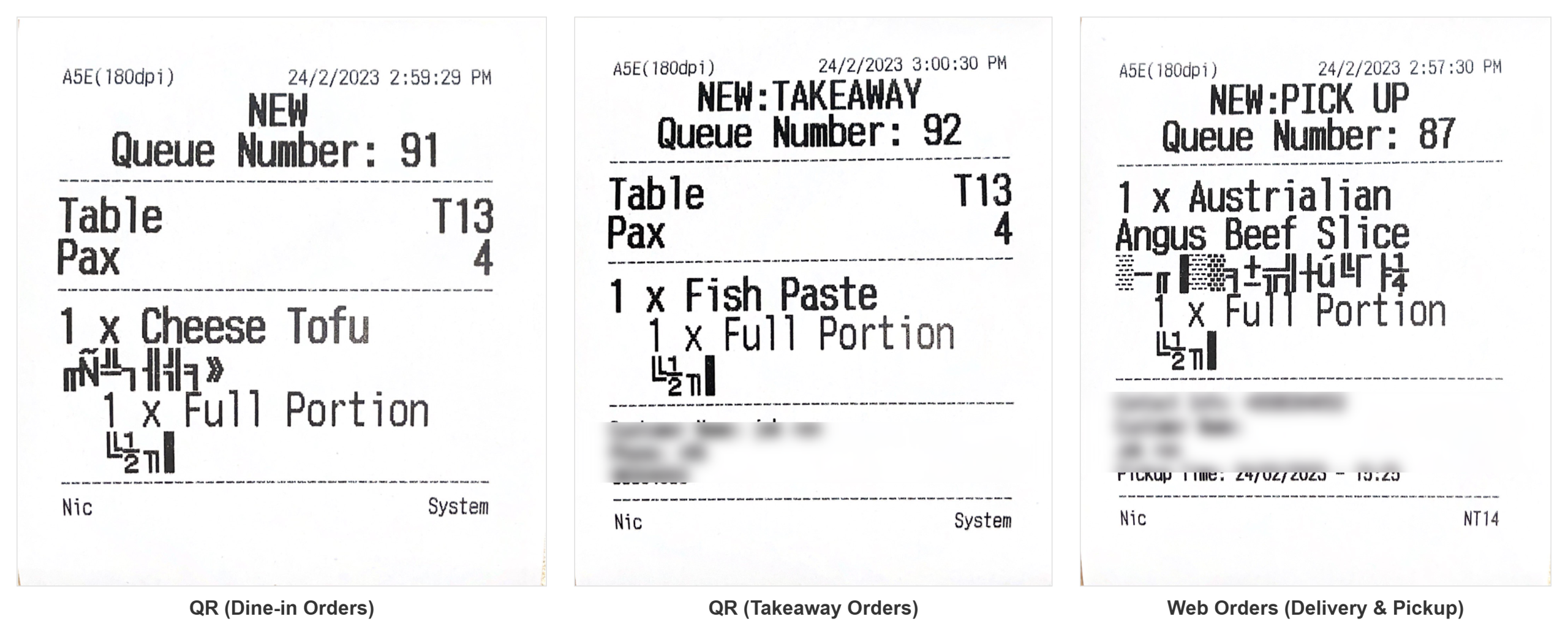
Depending on the mode of order, kitchen slips print out differently:
QR (Dine-in Orders): Queue No., Table No., Pax No.
QR (Takeaway Orders): Queue No., Table No., Pax No., Customer information
Web Orders (Delivery & Pickup): Queue No., Customer pickup information
QR orders also flow into the EPOS KDS, with the order ticket colour-coded according to the mode of order.