

Singapore’s Beverage Container Return Scheme (BCRS) takes effect on 1 April 2026. From that date, a mandatory 10-cent refundable deposit applies to every eligible pre-packaged drink sold in plastic or metal containers between 150ml and 3 litres. For retailers, the question is simple: is your point-of-sale system ready to handle it automatically?
What Is the BCRS and Why Does It Matter for Your Business?
The Beverage Container Return Scheme is a national initiative led by the National Environment Agency (NEA) and operated by BCRS Ltd, a non-profit company formed by Coca-Cola Singapore, F&N Foods, and Pokka. Its goal is to raise Singapore’s beverage container recycling rate to 60 percent in 2026, climbing to 80 percent by 2028.
Here is how it works: every time a customer buys an eligible pre-packaged drink, a 10-cent BCRS deposit is added on top of the product price. When the customer returns the empty container to a designated collection point, such as a reverse vending machine (RVM), they receive the 10 cents back. The deposit is classified as a refundable amount and is not subject to GST, which means your POS system must treat it as a separate, non-GST line item.
For retailers, this creates a real operational requirement: every qualifying beverage sold must have the 10-cent deposit recorded separately on the receipt, excluded from GST calculations, and tracked independently from your standard sales revenue. Businesses that fail to comply risk both regulatory penalties and messy audit trails.
Key BCRS Dates and What They Mean for Retailers
The rollout follows a phased approach. Understanding each stage helps you avoid selling non-compliant stock and ensures your systems are live before enforcement begins.
- 1 April 2026: BCRS officially launches. Products carrying the deposit mark can be sold to consumers, and the 10-cent deposit must be collected at the point of sale.
- 1 April to 30 September 2026 (transition period): Retailers may sell both BCRS-labelled and non-labelled stock side by side. This window exists to clear old inventory that does not carry the deposit mark.
- 1 October 2026 (full implementation): Only products bearing the BCRS deposit mark may be sold. From this date, all eligible beverages in your inventory must be fully compliant.
During the transition period, your POS must be capable of distinguishing between BCRS-registered barcodes (deposit applies) and older stock barcodes (no deposit). This is where a purpose-built system becomes essential rather than optional.
What Your POS System Must Do to Be BCRS Compliant
The IRAS and NEA have both issued guidance making clear that existing POS systems are likely to require reconfiguration before April 2026. The core requirements are:
- Recognise BCRS-registered barcodes and automatically apply the 10-cent deposit to eligible items at the point of sale.
- Display the BCRS deposit as a distinct line item on every tax invoice and customer receipt, separated from the beverage price.
- Ensure GST is not charged on the deposit amount, while continuing to apply GST correctly to the beverage sale itself.
- Track BCRS deposit collections as a liability in your records, not as sales revenue.
- Produce reports that allow you to reconcile the total deposit collected, for submission and compliance purposes.
Getting this wrong is not simply an administrative inconvenience. Incorrect GST treatment on the deposit, or failure to separate it from taxable revenue, creates liability for your business and complicates the input tax claims of your GST-registered customers.
How EPOS Handles BCRS Automatically with No Manual Steps Required
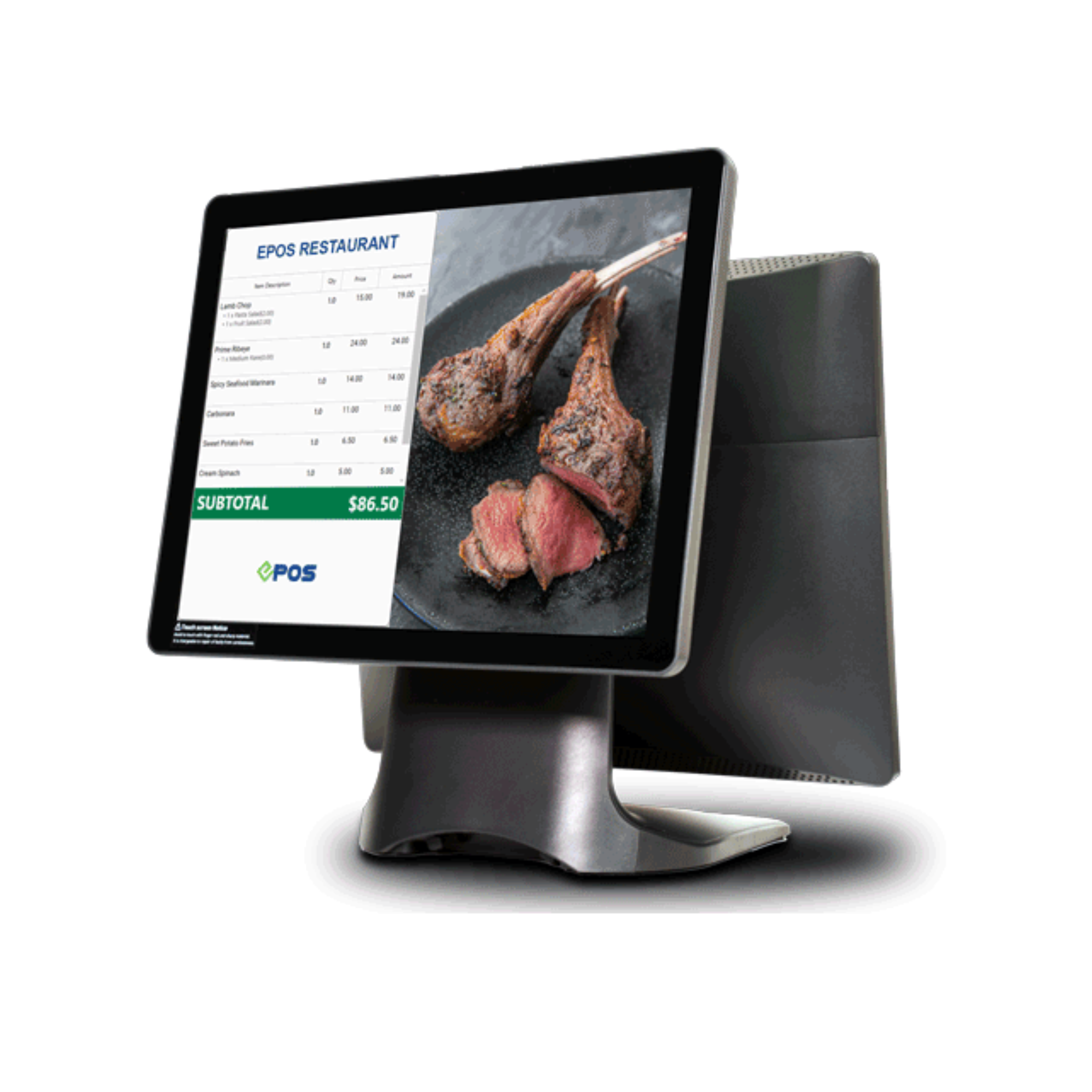
At EPOS, we have built BCRS compliance directly into our POS platform for Singapore retailers. When a product registered under the BCRS scheme is scanned at checkout, the system automatically identifies the item and adds the 10-cent deposit as a separate non-GST line item without staff intervention, manual keying, or configuration required per transaction.
This works seamlessly across all EPOS deployment types — cloud-based terminals, tablet POS, and multi-outlet retail setups. Whether you run a single convenience store or a chain of supermarkets, the deposit logic follows your entire product catalogue.
What EPOS does for you automatically:
- Automatically applies a 10-cent BCRS deposit when a BCRS-eligible barcode is scanned at checkout.
- Prints the deposit as a clearly labelled, GST-exempt line on every receipt — keeping you compliant with both IRAS invoicing guidelines and BCRS transparency requirements.
- Separates deposit collections from sales revenue in your back-end reporting, making reconciliation and auditing straightforward.
- Handles the transition period automatically: BCRS-labelled barcodes attract the deposit; older barcodes do not. No manual overrides needed.
- Works offline — if your internet drops, deposit logic continues to apply based on the local product database.
Setup takes a single configuration step at the back-end level — not per product, and not per terminal. Once activated, every outlet running EPOS across your business is covered.
Non-BCRS Registered Products During the Transition Period
Until 30 September 2026, older stock without the BCRS deposit mark can still be sold without the deposit being applied. EPOS distinguishes these automatically at the barcode level. However, merchants should ensure that BCRS barcodes are used for eligible products to guarantee the deposit is correctly applied.
Getting BCRS-Ready: What You Should Do Right Now
Here is a practical checklist for businesses preparing for BCRS compliance:
- Register as a supplier with BCRS Ltd if you sell regulated pre-packaged beverages in Singapore.
- Confirm with your POS vendor that the system can separate BCRS deposits from taxable revenue and print them as distinct, GST-exempt line items.
- Review your product catalogue and identify which SKUs will require the deposit mark by April 2026.
- Plan for the transition period — ensure your system handles both labelled and non-labelled stock without manual intervention.
- Test your receipts against IRAS invoicing requirements before go-live: the deposit must appear separately, labelled clearly, and with no GST applied.
- Brief your frontline staff on how to explain the deposit to customers. Confusion at the counter is avoidable if the receipt is clear and your team is prepared.
If you are already on EPOS, contact our team to activate BCRS support for your account. If you are evaluating a POS system, we can walk you through a live demonstration of how the deposit logic works in a real checkout environment. Contact us here.