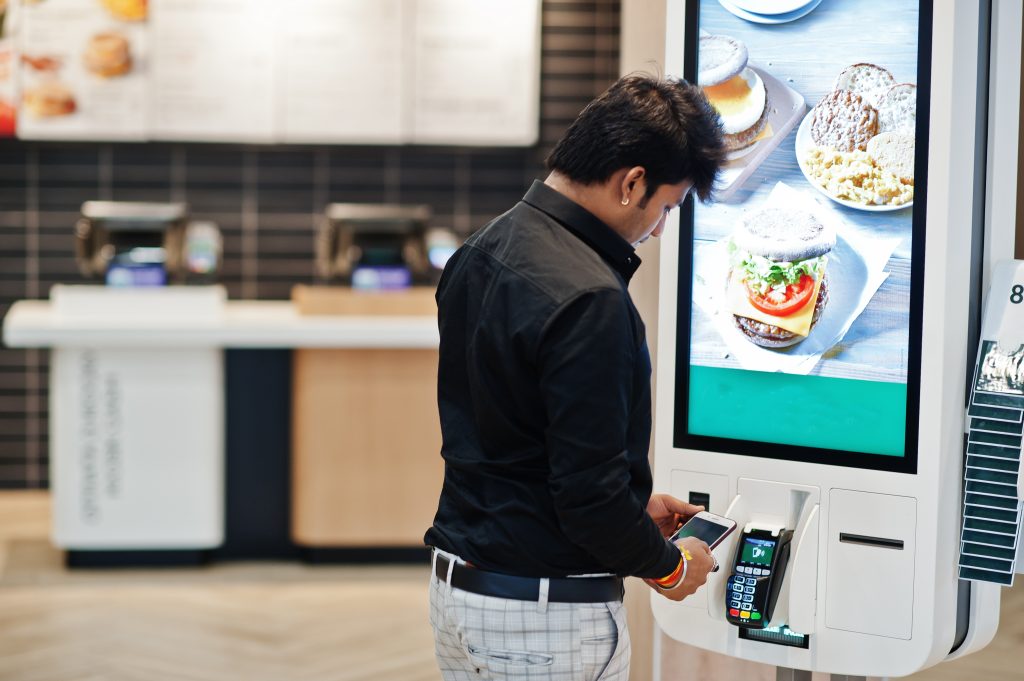
Singapore restaurants face a familiar challenge during festive seasons: overwhelming order volumes that test every operational limit. Self-ordering kiosks have emerged as the solution that addresses both customer experience and profitability, particularly when demand surges beyond traditional staffing capacity.
Why Self-Service Kiosks Matter During High-Volume Periods
Chinese New Year 2025 saw reservation systems crash under demand, with some establishments fully booked weeks in advance. The challenge extends beyond securing tables. Once customers arrive, restaurants face a surge in orders that pushes counter staff to their limits. Lines form quickly, wait times stretch, and the quality of service deteriorates precisely when customer expectations run highest.
The upcoming 2026 Chinese New Year will pose similar challenges for F&B businesses. Peak dining periods that normally stress operations become nearly unmanageable when festive demand layers on top of regular weekend rushes.
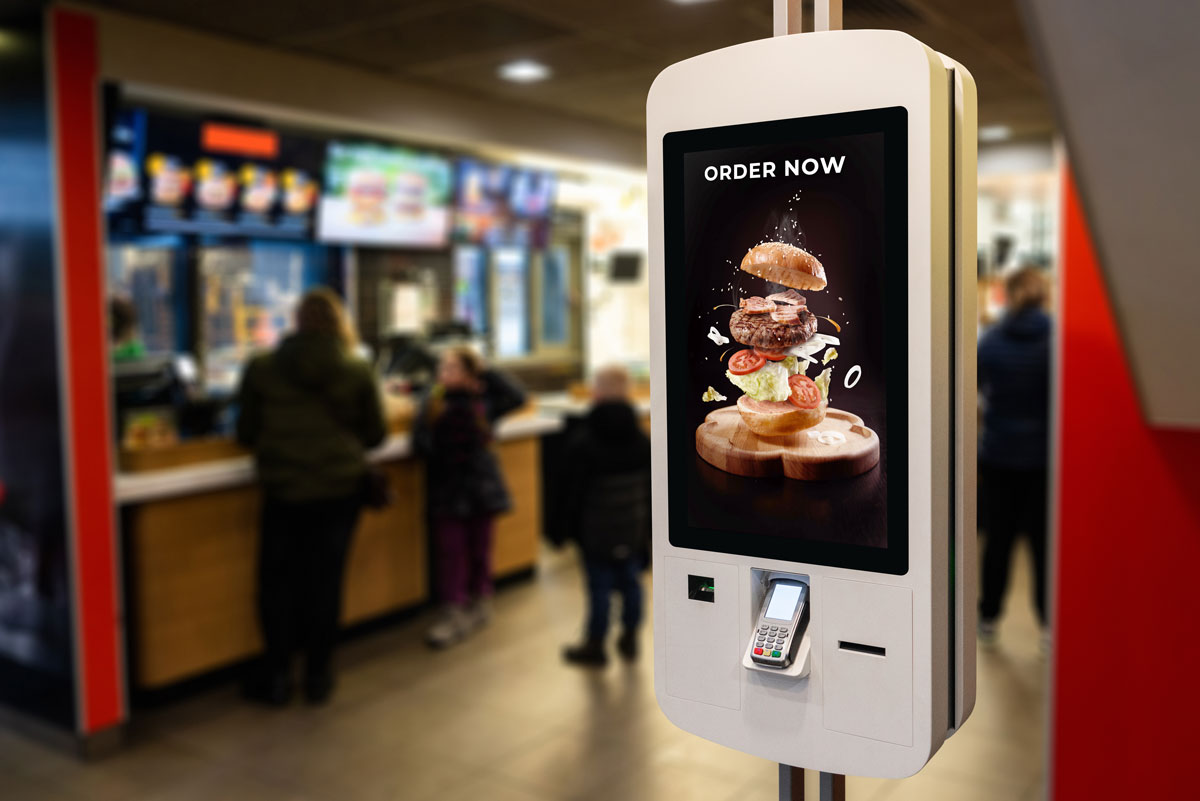
Self-ordering kiosks redistribute this operational burden. Instead of funnelling every transaction through limited counter staff, customers input their own orders directly into the system. The technology handles menu customisation, payment processing, and order transmission to kitchen display systems without the need for human intermediaries.
How Kiosk Machines Handle Regular and Seasonal Peak Periods
Peak dining hours create predictable stress points in restaurant operations. Lunch rushes between 12-2 PM and dinner surges from 6-8 PM concentrate the majority of daily transactions into narrow windows. Counter staff struggle to maintain speed while managing complex orders, customisation requests, and payment processing.
Self-service kiosks redistribute this operational burden. Customers input their own orders directly into the system. The technology handles menu customisation, payment processing, and order transmission to kitchen display systems without human intermediaries.
During Chinese New Year and other festive periods, these regular peak hours amplify significantly. Restaurants that normally handle 200 orders during a typical Friday dinner service might face 400-500 orders during reunion dinner periods. Family groups ordering multiple dishes with specific preparation requests compound the complexity.
Kiosks process multiple orders simultaneously. While a single cashier handles one transaction at a time, three kiosk units serve three customers concurrently. This parallel processing capability becomes critical when dining volume doubles or triples during seasonal celebrations.
Order accuracy improves because customers review and confirm their selections on-screen before payment. Staff redeploy from order-taking to food preparation, table service, and reservation coordination, which intensifies during festive rushes. The technology maintains consistent performance regardless of transaction volume, eliminating bottlenecks that occur when human operators reach capacity.
Key Features That Separate Effective Systems from Basic Models
Not all self-ordering kiosks deliver equivalent value. The hardware and software combinations that perform reliably in high-pressure environments share specific characteristics. Businesses might want to consider these lesser looked at
- Touchscreen Responsiveness
Touchscreen responsiveness matters more than operators initially expect. A 200-millisecond lag between tap and visual response frustrates customers and slows throughput. Commercial-grade capacitive screens, properly calibrated, maintain speed even after thousands of daily interactions.
- Payment Terminal Integration
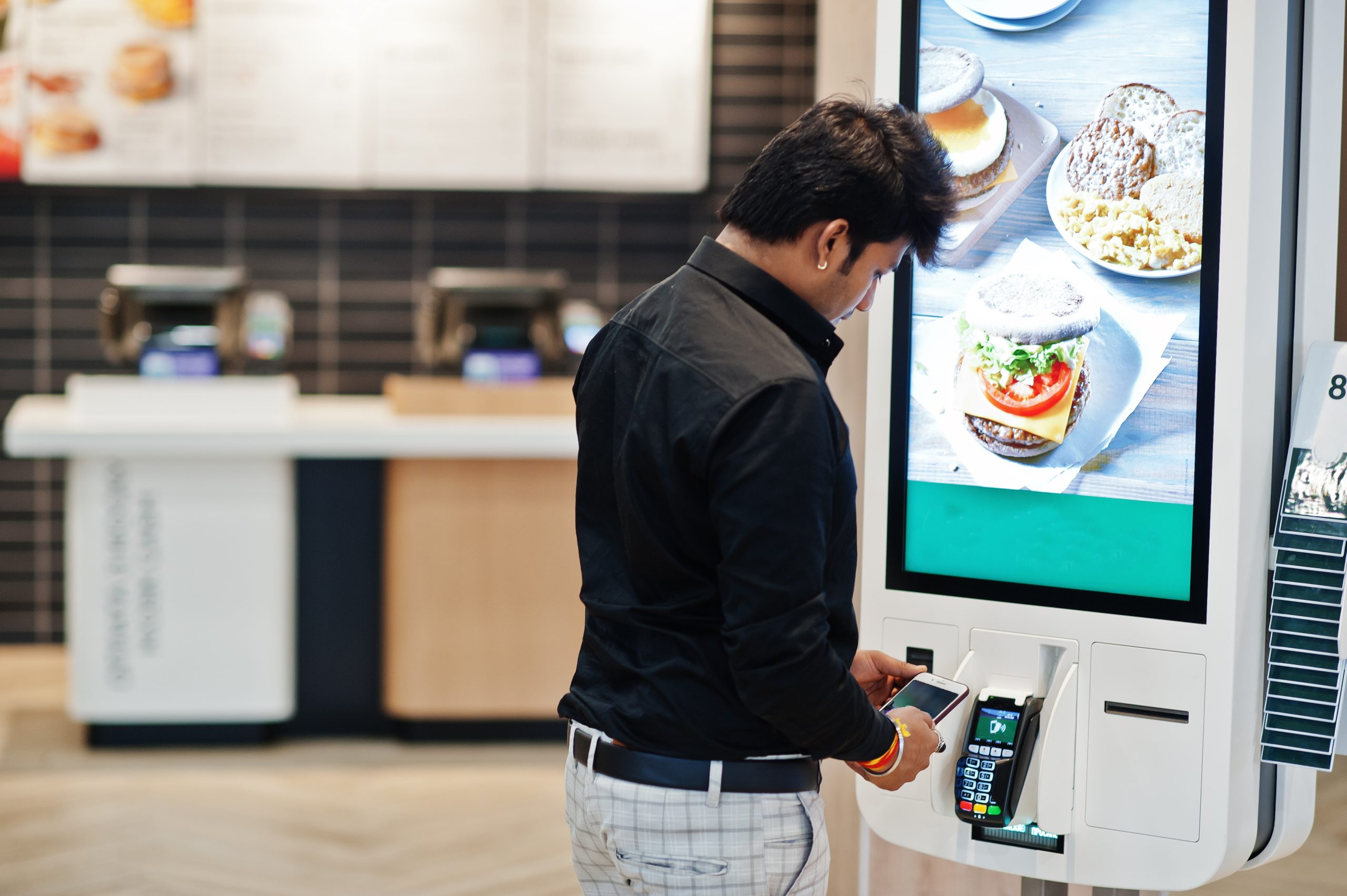
Payment terminal integration determines whether kiosks genuinely replace counter transactions. Systems requiring customers to complete kiosk ordering, then move to separate payment stations, defeat the efficiency purpose. Embedded contactless readers, QR code generation for mobile wallets, and receipt printing belong in single-unit configurations.
- Menu Management Flexibility
Menu management flexibility becomes essential when restaurants rotate seasonal offerings or adjust pricing dynamically. Cloud-based content management allows real-time updates across all kiosk units simultaneously. A dim sum restaurant can launch weekend specials on Friday morning without technician site visits.
- Multilingual Support
Multilingual support functions as a requirement rather than an enhancement in Singapore’s context. Seamless switching between English, Mandarin, Malay, and Tamil ensures accessibility across customer demographics without interface complexity.
Implementation Strategy for Restaurants Considering Adoption
Physical placement influences adoption rates significantly.
Restaurants with kiosks positioned at the counter see over 90% of orders come through kiosks on average, according to industry research from Xenial. This means location matters more than most operators expect. A national QSR chain tested kiosks by placing them off to the side, near restrooms rather than near ordering counters, prioritising easier access to electrical and network infrastructure for installation. After running the test for a year, the chain discontinued the program due to insufficient usage (OLEA). The lesson: convenience for installation teams does not translate to customer adoption.
Successful deployments position kiosks where customers naturally queue or make purchasing decisions. Businesses should observe current traffic patterns before finalising locations. Units integrated into the counter space or placed directly in front of traditional service areas achieve dramatically higher usage than those tucked into corners or secondary locations.
Staff training focuses on two dimensions
Team members need confidence in resolving common issues, such as payment declines or menu navigation confusion. Equally important is their ability to guide hesitant first-time users without creating a dependency.
The migration timeline typically spans 4-6 weeks from installation to majority adoption. Week one introduces kiosks as optional alternatives with staff standing by. Week two actively directs customers to available units. By week three, kiosks handle most transactions while counters remain open for complex requests.
Menu engineering also requires fresh consideration. Digital displays enable different presentation strategies than printed menus or counter boards, so high-margin items benefit from prominent visual placement. Combo meals and upsell prompts can also be naturally integrated into ordering workflows via conditional logic.
Measuring ROI Beyond Labour Cost Savings
Finance teams naturally focus on headcount reduction when evaluating kiosk investments. Case studies show remarkably fast payback periods: a taqueria recovered its investment in under 7 weeks, while a ramen restaurant achieved payback in just 4 weeks, with the average payback period under 6 weeks across multiple implementations (Restroworks).
This calculation, based purely on labour savings, misses substantial secondary benefits. Average transaction values increase by 10-30% with kiosk orders compared to traditional counter service, and studies find customers spend 14-16% more when using self-ordering technology (Restroworks) (Kiosk Industry). McDonald’s reported a 30% increase in average order value after introducing kiosks (Kiosk Industry). The effect stems from multiple factors: customers take more time considering options without queue pressure, suggestive selling prompts appear at optimal decision points, and the absence of human interaction removes social pressure to order quickly.
Order accuracy improvements also help reduce food waste and the costs of remaking food. Self-service technology contributes to a 99% order accuracy rate (OLEA), and 69% of kiosk-enabled restaurants improved order accuracy (Restroworks). When customers review and confirm their selections on-screen before payment, the number of customisation errors drops dramatically.
Data collection capabilities create ongoing value that compounds over time. Every transaction generates timestamped records of item selection patterns, customisation preferences, and payment methods. Analytics reveal which menu combinations actually sell together, optimal pricing thresholds, and peak demand timing down to 15-minute intervals.
Integration Considerations with Existing Restaurant Systems
Before purchasing a kiosk machine, there are other integration considerations businesses should consider.
- Self-ordering kiosks function as front-end interfaces connecting to backend infrastructure
Their effectiveness thus depends entirely on the smooth flow of data between point-of-sale systems, kitchen display screens, inventory management systems, and customer relationship management platforms.
- API compatibility also determines integration complexity and cost.
Modern restaurant POS systems offer documented APIs that kiosk manufacturers design around. Legacy systems may require middleware or custom development work that extends implementation timelines from weeks to months, which businesses have to account for.
- Kitchen display system synchronisation ensures that kiosk orders appear identically to counter orders on chef-facing screens.
Preparation staff should not need to distinguish order sources or follow different workflows based on transaction origin. This uniformity maintains kitchen efficiency during mixed-channel rush periods.
- Inventory tracking becomes more precise when kiosks communicate stock levels in real time.
Menu items automatically grey out when ingredients run low, preventing orders that the kitchen cannot fulfil. This dynamic availability works both ways: marking food items as sold out at the POS is immediately reflected on kiosk screens.
- Customer data unification matters for restaurants building loyalty programs or personalised marketing.
Transactions should link to customer profiles, whether orders originate from kiosks, mobile apps, or traditional channels. A unified view supports accurate purchase history and targeted promotions.
Common Implementation Mistakes and How to Avoid Them
Restaurants encounter predictable obstacles when deploying self-service kiosks. Awareness of these patterns enables proactive mitigation. These may include, but are not limited to:
- Insufficient Testing
Insufficient testing under realistic conditions leads to avoidable launch-day problems. Kiosks that perform flawlessly with two test users may freeze when five customers attempt simultaneous orders. Load testing should simulate actual peak traffic with multiple concurrent sessions.
- Overlooking Accessibility
Overlooking accessibility requirements creates barriers for elderly customers and those with mobility limitations. Screen height, text size, contrast ratios, and physical reach to payment terminals need accommodation beyond minimum compliance standards. Observing diverse user groups during pilot periods reveals necessary adjustments.
- Neglecting Maintenance Protocols
Neglecting maintenance protocols leads to deteriorating performance over time. Touchscreens accumulate grease and grime, which impair responsiveness. Receipt printers jam. Payment terminals lose network connectivity. Scheduled cleaning, consumable replacement, and systematic troubleshooting prevent minor issues from sending customers back to the counter.
- Underestimating the Cultural Transition
Underestimating the cultural transition treats technology deployment as purely technical. Some customer segments genuinely prefer human interaction or feel anxious about unfamiliar interfaces. Maintaining staffed ordering options and patient assistance throughout the adoption curve builds loyalty rather than alienates it.
Ready to Transform Your Order Management?
Restaurants managing high-volume periods without self-ordering kiosks operate with one hand tied behind their backs. The technology exists now to eliminate wait times, reduce errors, and capture revenue that slips away when customers see long queues and leave.
Implementation success depends on choosing systems designed for food service operations rather than generic retail kiosks. Look for solutions with proven restaurant integrations, responsive support during critical service periods, and upgrade paths that accommodate future menu complexity or additional locations.
Start by analysing your current bottlenecks during peak hours. Count how many transactions your counter staff complete per hour. Measure average order times. Document error rates and remake frequency. These baseline metrics provide concrete targets for improvement and ROI calculation.
The restaurants thriving during seasonal surges have already made this transition. Customer expectations continue shifting toward speed and convenience. Self-service kiosks deliver both while strengthening operational fundamentals that drive profitability year-round.